Save Monte Cresta
Advocating for responsible hillside land use, slope safety, and environmental conservation in Belmont’s San Juan Canyon neighborhood.
Project Overview & Requested Exceptions
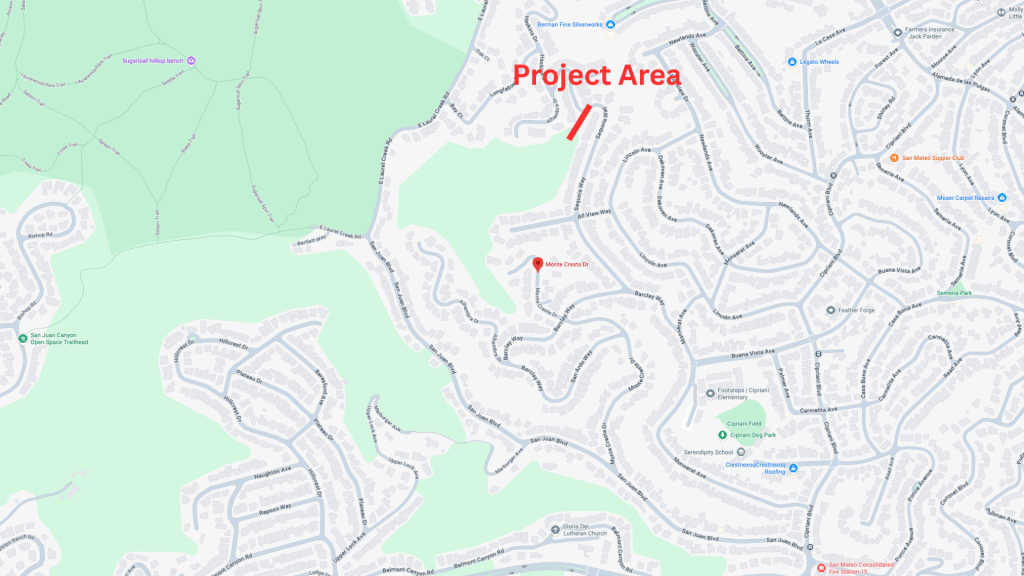
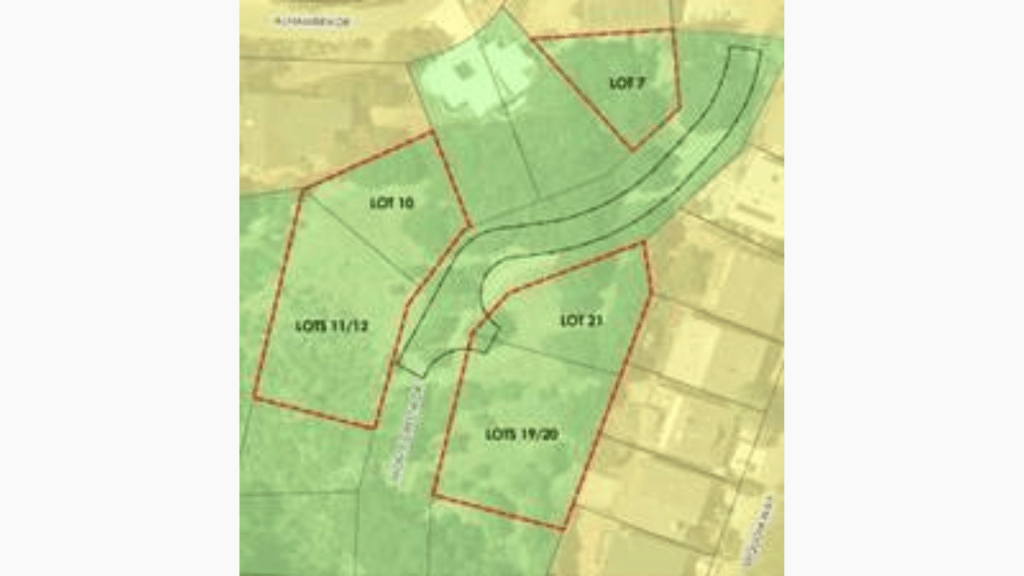
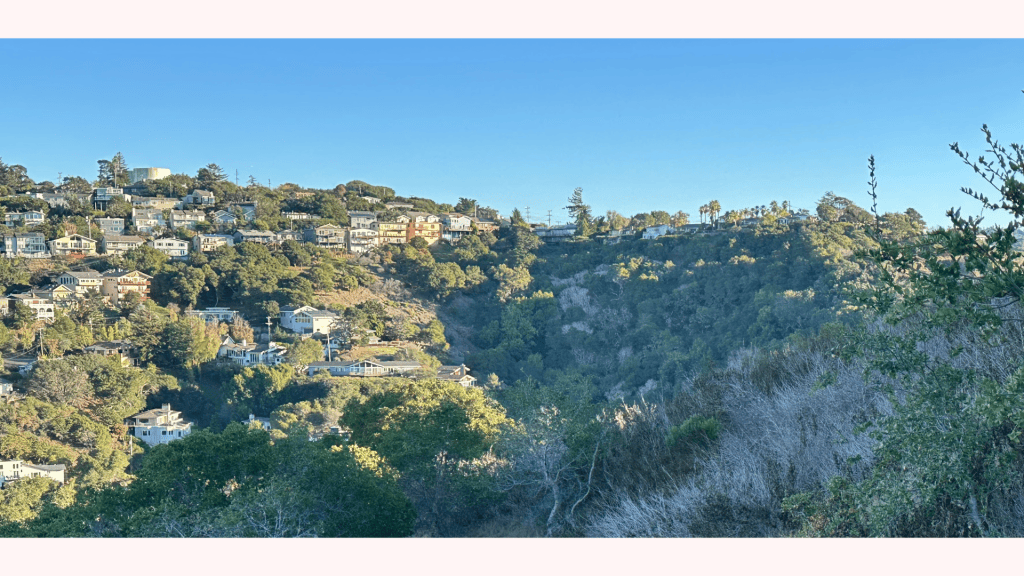
The proposed Monte Cresta Drive Road Extension & Housing Project requests a 335-foot extension of Monte Cresta Drive off Sequoia Way providing access to 5 undeveloped hillside parcels. Development of three ~3,500 sq. ft. single-family homes on applicant-owned lots across steep hillside parcels overlooking San Juan Canyon.
The project relies on multiple discretionary approvals from the City of Belmont, including a Road Improvement Plan Exception (Belmont City Code Sec. 7-13(e)(7)), Floor Area Transfer, Conditional Use Permit, and Parking Exceptions.
Primary Environmental & Safety Concerns
1. Wildfire & Evacuation Safety
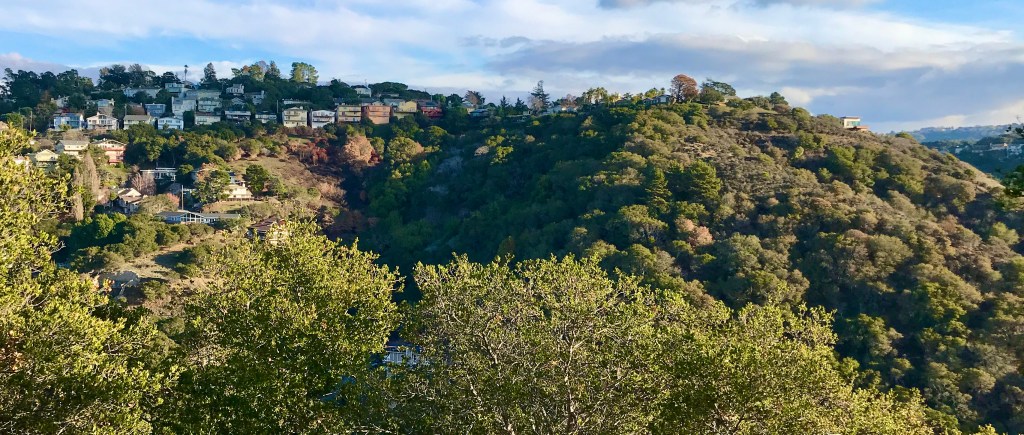
Monte Cresta Drive terminates at a narrow hillside intersection near Sequoia Way. Extending road access and density deeper into high-risk canyon terrain creates severe evacuation bottleneck risks for both existing and new residents during wildfire events.
This is not a hypothetical concern — in September 2020, a four-alarm fire in San Juan Canyon forced the evacuation of roughly 40 homes near Alhambra Drive, with officials warning that roads might not be passable by vehicle during the emergency response.
2. Steep Slope & Geotechnical Hazards
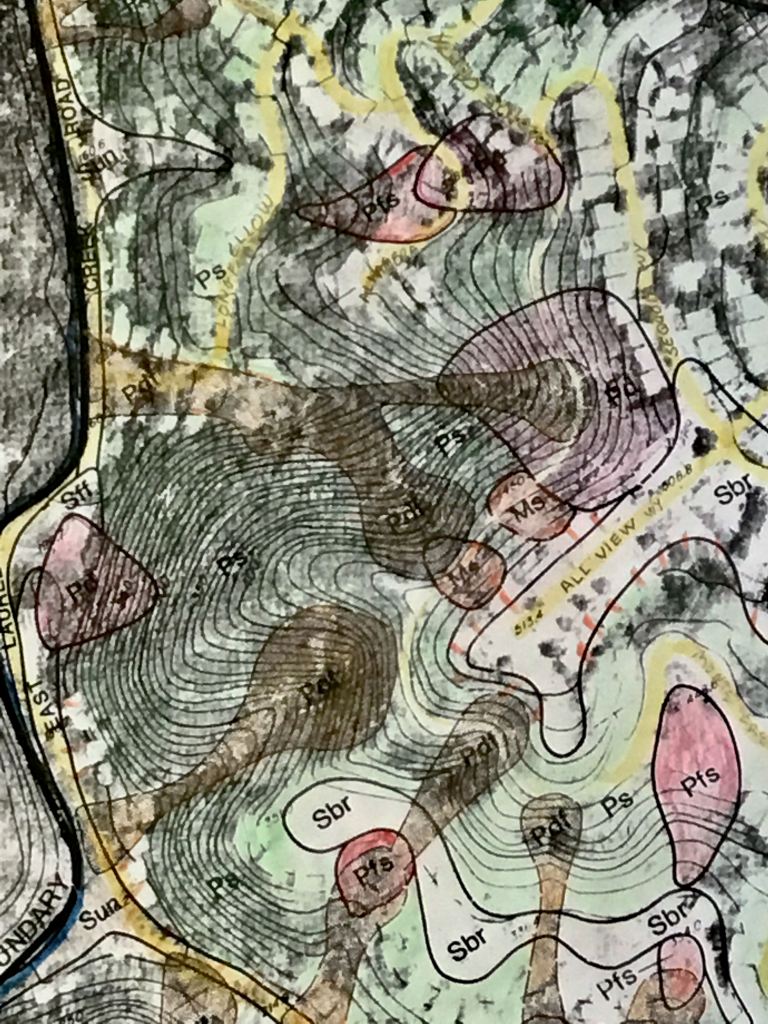
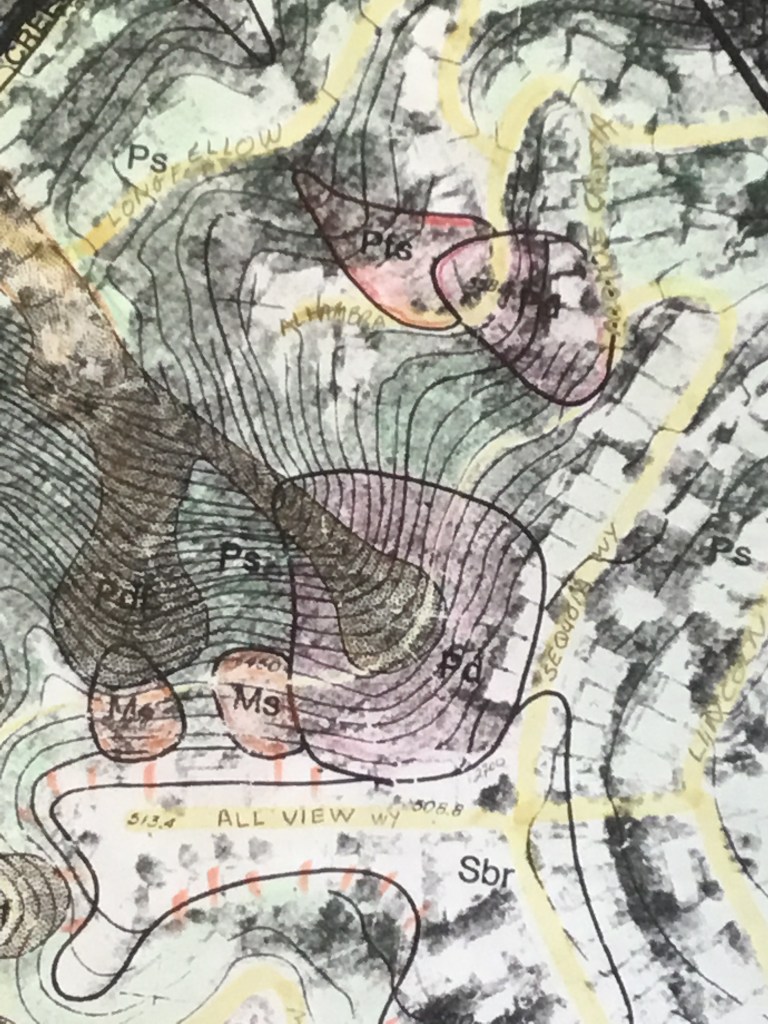
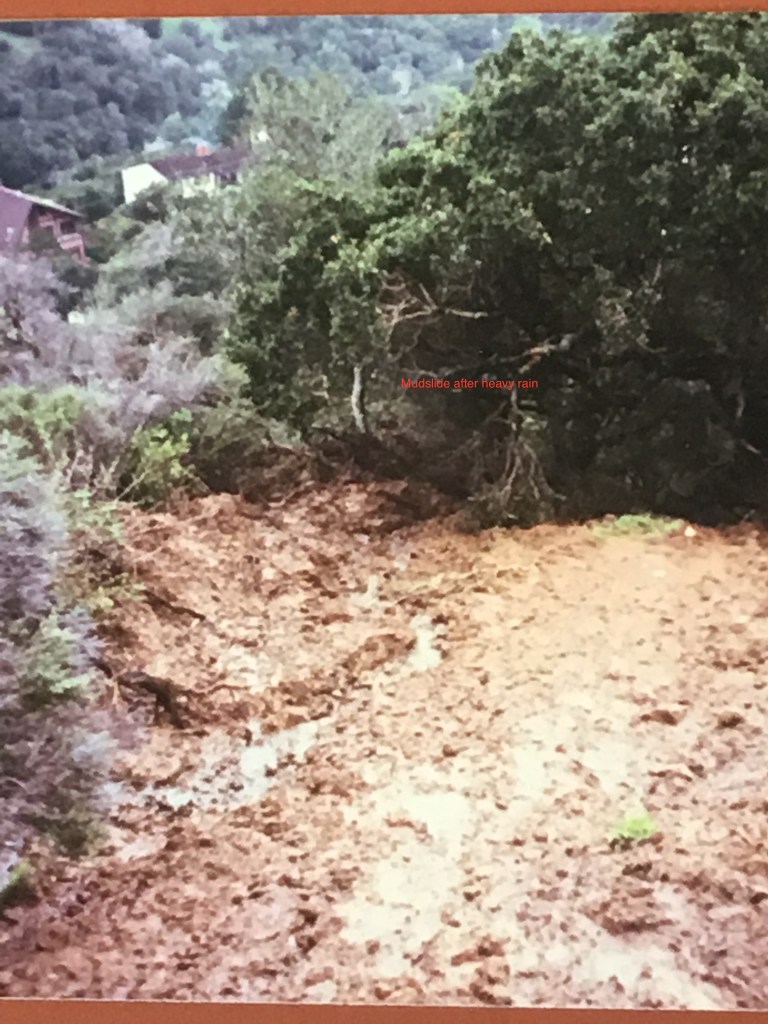
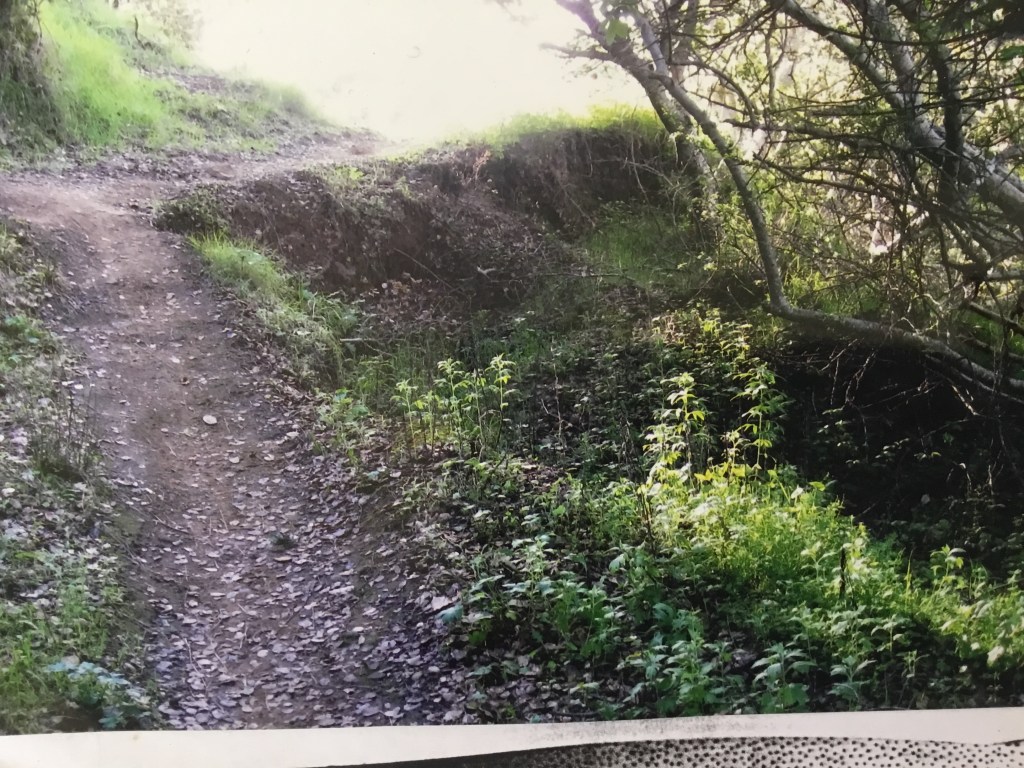
Extensive cut-and-fill grading on steep northwest-facing slopes risks destabilizing local soils and altering natural drainage runoff into San Juan Canyon during heavy atmospheric river storms.
Could this happen in Belmont?
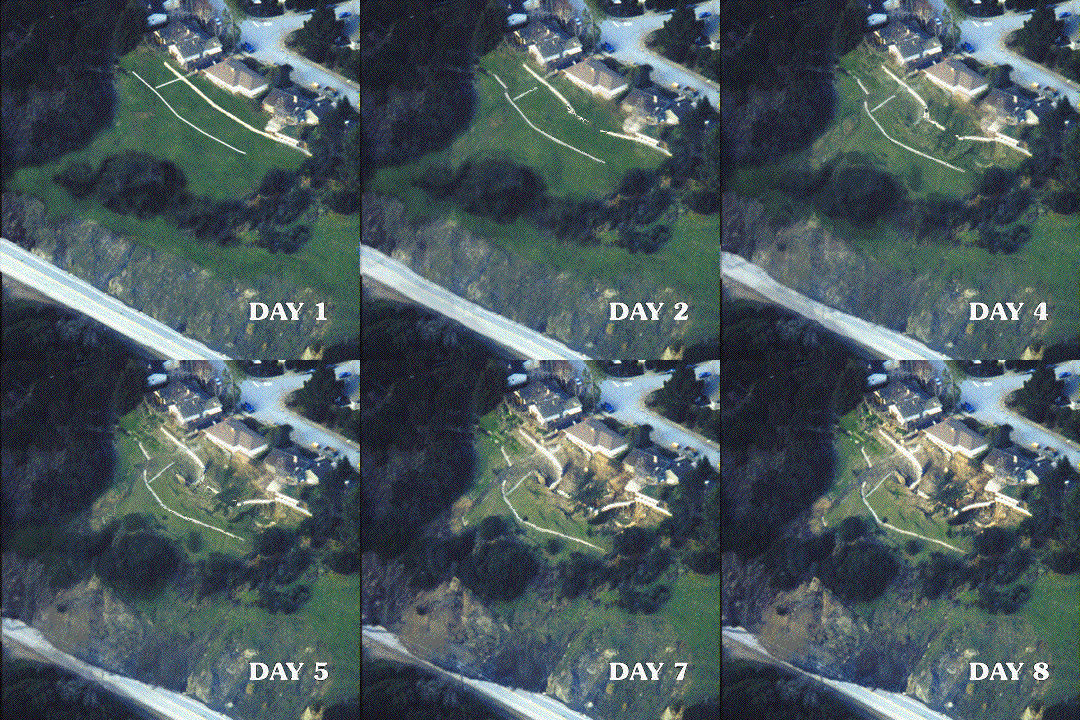
Some of you might be familiar with the major landslide on Crystal Springs road a few years ago.
Could this happen in Belmont? We don’t know, but it is a similar slope steepness with somewhat similar baserock as far as we can read. Maybe the rocks are stronger here? How can it be known without a thorough analysis? Why does the City refuse to require a detailed slope stability analysis? Isn’t this an area where precaution is warranted?
Landslides are no stranger to these hillsides: a single 1982 storm triggered roughly 18,000 across the Bay Area, some of them deadly. See why in the U.S. Geological Survey’s short film Riding the Storm, which shows how steep slopes, weak rock, and intense winter storms make this region so prone to failure.
Steep Slopes, Erosion & Landslide Risk
3. Canyon Ecology, Tree Removal & Habitat Loss
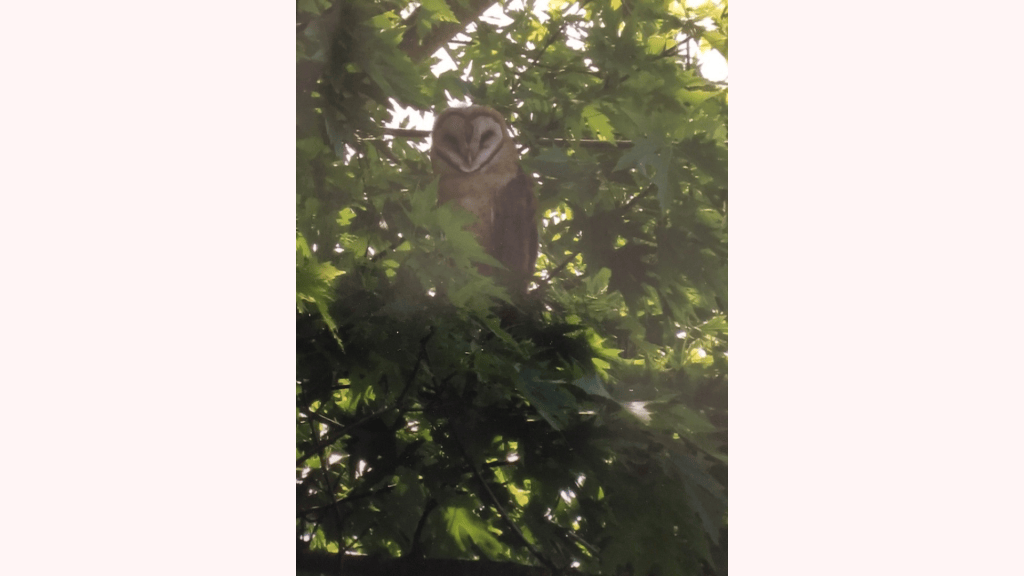
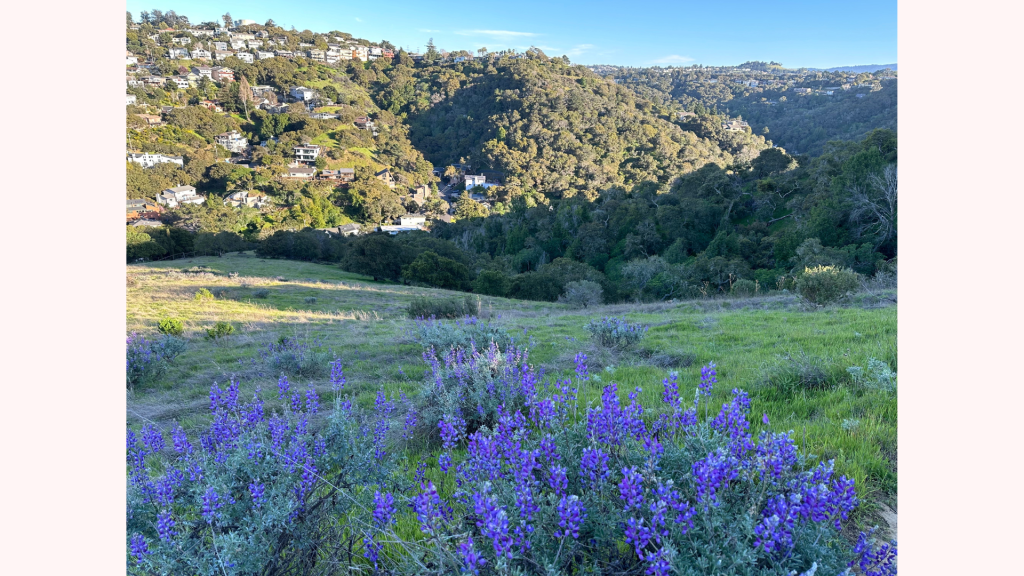
Construction requires significant removal of native trees and habitat disturbance in a sensitive hillside transition zone connecting directly to protected open space in San Juan Canyon. The development blocks a wildlife corridor – a route that wildlife uses daily to access creeks and sheltered areas. Habitat segmentation (breaking continuous wilderness into isolated pockets separated by roads, fences, or housing) kills wildlife as effectively as habitat destruction, since they can no longer survive if they can’t travel from their feeding and water sources to their nightly shelter area. Deer, coyotes, bobcats require distinct ranges for foraging, drinking water, and breeding. Roads built through movement corridors create high risk for collisions and roadkills.


4. Cumulative Environmental Effects
Evaluating this road extension in isolation ignores the incremental compounding impacts on San Juan Canyon. The buildout of these parcels—combined with other recent and potential hillside developments—creates cumulative pressures on stormwater runoff, wildfire risk, traffic capacity, and habitat fragmentation that have not been adequately analyzed under CEQA.
Unaddressed Resident Concerns & Inadequate City Findings
Residents raised major objections during public testimony and written submittals (including CEQA Appendix H), demonstrating that City Staff’s recommendation for exception approvals relies on insufficient findings and an incomplete application under Belmont Zoning Ordinances:
1. Belmont Zoning Ordinance & Exception Standards
The Issue: Under Belmont City Code (e.g., Section 7-13), exceptions to road standard widths, parking lanes, and cross-slopes require specific mandatory findings showing that strict compliance is impossible or unnecessary and that public safety is not compromised.
Unaddressed Flaw: City staff recommended exceptions without making legally robust findings. Residents demonstrated that relaxing road dimensions in a High Fire Hazard Severity Zone compromises emergency access without meeting the ordinance’s strict threshold for hardship.
2. Incomplete Application Status
The Issue: A complete application is required before statutory findings and recommendations can be legally rendered by the City.
Unaddressed Flaw: Key engineering submittals, definitive drainage routing, cross-slope alignment details, and utility connection guarantees remain missing or subject to post-approval condition deferrals. Approving exceptions on an incomplete application deprives the public and Commission of the ability to evaluate real-world impacts.
3. Inadequate Financing & Cost-Estimate Plan
The Issue: Private road extensions serving multi-parcel developments require a guaranteed, legally binding Finance Plan and Cost Estimate covering both initial construction and long-term private maintenance.
Unaddressed Flaw: The proposed Cost Estimate & Finance Plan fails to establish enforceable mechanics for ongoing maintenance, stormwater facility repairs, or cost-sharing among benefiting parcels (APNs 043-234-170, 043-234-210, 043-232-090, 043-232-130, 043-232-270), risking future municipal liability.
4. Floor Area Transfer (FAT) Findings
The Issue: Transferring floor area across steep hillside lots requires rigorous findings that the resulting structure sizes will not dominate the landforms, create visual bulk, or exacerbate slope hazards.
Unaddressed Flaw: Staff findings failed to adequately analyze how transferring floor area to construct three 3,500 sq. ft. homes on northwest-facing slopes aligns with the specific density and bulk constraints established in the 1988 San Juan Hills Area Plan EIR.
5. Piecemealing & Cumulative Impact Analysis
The Issue: CEQA prohibits “piecemealing”—evaluating individual components of a broader development plan separately to downplay their combined environmental footprint.
Unaddressed Flaw: Recommending exceptions for a road extension serving up to 5 parcels without a binding, comprehensive assessment of full cumulative buildout impacts fails to meet CEQA guidelines for cumulative effect analysis.
Belmont City Documents & Official Public Records
Access official municipal filings, environmental studies, staff reports, and public notice documents directly from the City of Belmont Community Development Department portal:
Official City Project Portal
The City of Belmont maintains a dedicated project web page containing all public notices, environmental drafts, and commission agenda items related to Monte Cresta Drive.
Key Public Record Documents to Reference in Comments
Initial Study / Mitigated Negative Declaration (IS/MND): Environmental review document detailing slope stability, biological resources, and proposed mitigations.
CEQA Section 15183 Exemption Checklist & Appendix H: Contains full compiled public comments and testimony submitted by neighbors during environmental review periods.
Public Works Exception Recommendation Letter: City engineering memo assessing requested cross-slope, parking, and road width exceptions under Belmont City Code Sec. 7-13.
Special-Status Plant Survey Reports: Focused botanical evaluations covering rare or special-status vegetation on and surrounding the road extension path.
San Juan Hills Area Plan & EIR (1988): Foundational planning document governing hillside density, grading restrictions, and canyon preservation standards.
Full Project History (1988 – 2026)
| Timeframe | Phase / Action | Key Technical Studies & Public Events |
|---|---|---|
| 1988 | Environmental Baseline | San Juan Hills Area Plan EIR: Sets baseline zoning, slope preservation, and density controls. |
| 2018 – 2021 | Applicant Technical Submittals | Geotechnical reviews, Sewer Analysis (2019), Hydrology Proof of Concept (2021), and Cross-Slope exception requests filed. |
| 2022 – 2023 | Initial CEQA Drafts & Public Opposition | Draft IS/MND (2022) and Section 15183 Checklist (2023) released. Appendix H documents extensive neighborhood testimony challenging fire safety, slope stability, cumulative impacts, and incomplete application data. |
| Feb 2024 | City Exception Recommendation | City issues Recommendation Letter favoring requested road cross-slope and parking exceptions despite missing findings. |
| May 7, 2024 | Planning Commission Hearing | Commission hears overwhelming public testimony pointing out statutory flaws, fire safety hazards, cumulative risks, and unaddressed ordinance requirements. |
| June 4, 2024 | Commission Postponement | Commission votes to postpone consideration to require staff and applicant to respond to public testimony and re-examine CEQA compliance. |
| Feb 2025 – 2026 | Updated IS/MND & Ongoing Review | City releases updated Draft IS/MND (2025). Residents continue advocating for full ordinance compliance, complete submittals, and formal findings before any decision. |
Take Action
Demand that the Belmont Planning Commission require a complete application and strict adherence to Belmont Zoning Ordinance finding requirements before considering any exceptions.
Contact the City Council
Send your comment directly to the Belmont City Council members reviewing the Monte Cresta application. A short, respectful note in your own words has the most impact.
Tip: clicking “Email” opens your own mail app with the address and subject pre-filled. You can also select any address above and copy it manually.
Save Monte Cresta Community Initiative • Belmont, CA 94002
Not affiliated with the City of Belmont. Compiled from official public records.

